Introduction
Damage to teeth often happens without warning. You feel a sharp edge or pressure pain when you bite down on something simple. What many don’t realize is that cracked teeth rank as the third leading cause of tooth loss in the United States, after cavities and gum disease. Early warning signs frequently get dismissed as minor issues. That brief cold sensitivity, occasional tooth pain when biting, or visible lines in your teeth aren’t random occurrences to ignore. Understanding whether you have a chipped tooth or a cracked tooth can mean the difference between simple repair and losing the tooth. What seems like a small cosmetic issue today can develop into an infection, persistent pain, or a dental emergency, such as a chipped tooth situation affecting your daily life.
The distinction between a chipped tooth and a cracked tooth determines your treatment timeline and urgency. At Meridian South Family Dentistry, serving Tacoma, Graham, and Puyallup, WA, we regularly treat both tooth damage types.
This guide will help you figure out what condition you have, understand the main differences between them, know when to get help right away, and learn about the treatment options that are available.
What Is a Chipped Tooth?
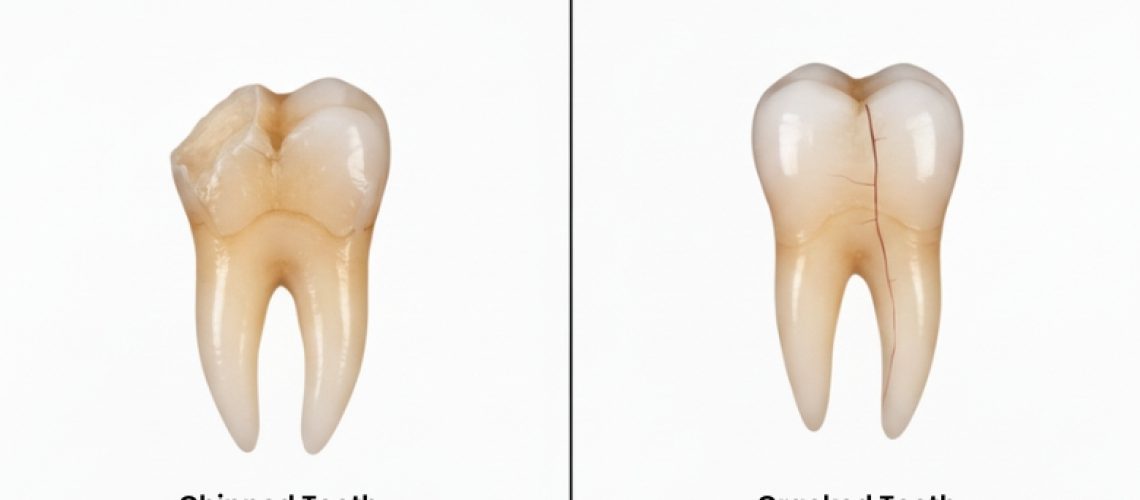
A chipped tooth occurs when a piece of enamel breaks off. The damage usually happens on the outer layer of protection and is most common on front teeth.
You will usually notice right away because your tongue feels the rough edge, or you can see the damage. Biting hard foods, getting while playing any sport, grinding your teeth at night, or accidentally hitting hard objects are all common chipped tooth causes. During dental trauma, the front teeth are especially at risk. Most chips need to be looked at by a professional.
What Is a Cracked Tooth?
A cracked tooth is a little more difficult than a chip. Instead of losing a piece, the tooth develops a fracture line through its structure. These lines can be shallow craze lines or deep tooth cracks that go all the way to the root.
The challenge: cracked teeth are often invisible. You might have symptoms even if there is no visible damage.
REALITY CHECK: Research on 14,000+ molars found 31.4% had cracks, with over half showing no symptoms. Early detection requires professional examination.
Types include craze lines (surface cracks), fractured cusp (cracks around fillings), cracked teeth (vertical fractures from the chewing surface), split teeth (divided tooth), and vertical root fractures (starting in the root).
Cracked tooth symptoms are inconsistent: tooth pain when biting that disappears upon release, intermittent cold sensitivity, and unpredictable discomfort. Because of this irregular pattern, treatment is often delayed.
Understanding The Differences Between Chipped and Cracked Teeth
While both involve tooth damage types, the challenges presented by them are different.
| Chipped Tooth | Cracked Tooth |
| A piece came off | Fracture through the tooth |
| Easily visible | Usually invisible |
| Mostly happens in front teeth | Affects back molars |
| Little pain | Occasional pain, tooth sensitivity |
| Can wait for days | Need immediate attention |
Pain patterns are very different. A chipped tooth might not hurt much, but you will notice the rough edge. A cracked tooth creates unpredictable symptoms: sharp pain when biting that disappears, intermittent cold sensitivity, and varying daily discomfort.
Structurally, a chip removes material but leaves the remaining tooth intact. A crack compromises structural integrity while keeping pieces attached—like glass fractured but not separated.
ALSO READ ABOUT: 7 Smart Ways to Protect Your Smile During Sports and Activities
Why These Differences Matter
The difference has an impact on treatment methods, how long it takes, and the results.
Treatment complexity: How to fix chipped teeth is simple. It includes smoothing, bonding, or veneers, often done in one visit. For cracked tooth treatment, you may need to have a dental crown repair, get root canal therapy, and go to the dentist several times.
Effects on Health: A cracked tooth lets bacteria get to the inner pulp, which can lead to infection and possibly loss of the tooth. Cracked tooth symptoms become more serious with time. Early intervention preserves teeth; delayed treatment may require extraction.
Treatment Approaches
- For chipped teeth: Minor chips are smoothed out and polished. Moderate chips receive cosmetic bonding with tooth-colored resin. Larger chips require crowns or veneers.
- For cracked teeth: Superficial craze lines on teeth need monitoring. Deeper cracks require dental crown repair. If cracks go all the way to the pulp, you need root canal therapy and a crown. If you have deep tooth cracks below the gum line, you may need to consider tooth restoration options such as implants.
At Meridian South Family Dentistry, we provide same-day emergency dental care for dental emergency chipped tooth situations in Tacoma, Graham, and Puyallup.
Signs You Need To See a Dentist Right Away
Not every chip or crack needs immediate emergency care, but some signs do need to be looked at right away by a professional.
Get emergency care right away if you experience:
- Severe, long-lasting pain that doesn’t go away with over-the-counter drugs
- Pink pulp tissue that can be seen inside the tooth
- Bleeding that lasts longer than 15 minutes
- Gums or face swelling near the tooth that is hurting
- Tooth sensitivity so intense that breathing causes sharp pain
- A large portion of the tooth was broken off
- Fever or foul taste indicating possible infection
Arrange a visit within 24-48 hours for:
- Any new chip or crack, even if it doesn’t hurt
- Tooth pain when biting or chewing
- More sensitive to hot or cold
- Sharp edges that hurt your tongue or cheek
While awaiting your appointment:
Rinse with warm salt water, take painkillers as directed, put a cold compress on the swelling, avoid chewing on the affected side, and eat only soft foods. Dental wax can help with sharp edges for a short time.
Prevention Tips
A lot of chipped and cracked teeth situations could be avoided with some simple precautions and daily habits.
- Get a mouthguard if you play sports. The custom-fitted ones we make at our office work way better than anything you’ll find at the store. They actually fit your bite properly and stay in place when you need them most.
- Deal with nighttime grinding. If you’re waking up with sore jaws or tension headaches, you might be grinding your teeth while you sleep. This is one of the biggest chipped tooth causes out there and creates those tooth crack lines over time. A custom nightguard can stop the damage before it starts.
- Stop using your teeth as tools. We’ve all done it—using our teeth to rip open a package or crack open a bottle. But these habits, along with chewing ice and biting down on hard candy or unpopped kernels, are asking for trouble. Your teeth weren’t designed for that kind of work.
- Don’t skip brushing and flossing. When decay sets in, your enamel gets weaker. That makes you way more vulnerable to tooth enamel damage from everyday activities. Taking care of your teeth daily makes them stronger.
- Watch what you drink. Things like soda, wine, and citrus juice can slowly wear down your enamel. If you’re going to have them, just rinse your mouth out with water when you’re done. It’s a small step that makes a difference.
- Get your acid reflux under control. If you deal with GERD, that stomach acid isn’t just uncomfortable—it’s actively damaging your teeth and increasing your enamel fracture risk. Talk to your doctor about managing it effectively.
Coming in for regular checkups gives us a chance to spot cracked lines in teeth and other early signs of weakness before they turn into bigger problems.
Your Next Move
Knowing the difference between a chipped tooth and a cracked tooth can help you know what to do when your teeth get damaged. Chipped teeth usually only need cosmetic work and can wait a few days for treatment. However, cracked teeth need to be treated right away to stop them from getting worse and possibly losing a tooth. If you ignore either condition, things could get worse, but knowing how urgent each one is helps you make smart choices about your dental health.
Meridian South Family Dentistry has been taking care of Pierce County families since 1982—over four decades of experience you can trust. We handle everything from enamel chips fixed with cosmetic bonding to deep tooth cracks requiring root canal therapy and dental crown repair. What makes us different? We’re honest with you—no unnecessary procedures, just honest assessments and excellent care focused on saving your natural teeth whenever possible. Whether you’re in Tacoma, Graham, or Puyallup, you’ll find a comfortable office where your concerns actually matter.
If you have a chipped tooth, a cracked tooth, or unexplained tooth pain when biting, don’t wait for the problem to get worse. To make an appointment with our skilled staff, call 253-847-4388. We can see you the same day for emergencies, so you can get the care you need right away.