
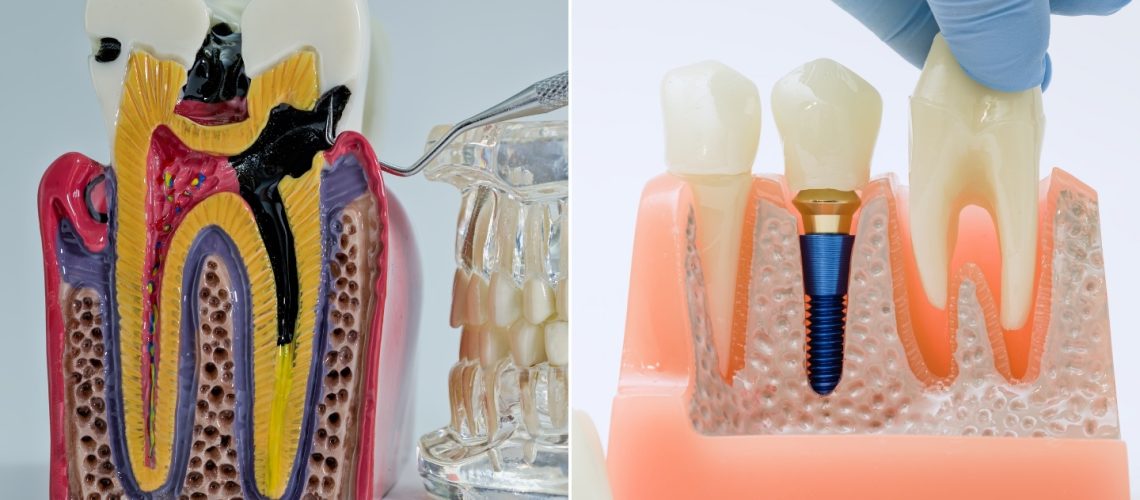
That dull ache you keep ignoring? It is not going away on its own. A dental infection doesn’t stay in control; it spreads to your jaw, nearby teeth, and in severe cases, your blood. People have to visit the emergency room because of a toothache that they ignored for weeks. The longer you leave an infected tooth alone, the more bone you lose, the fewer options you have, and the harder everything gets. This is not a “wait and see” situation.
This blog breaks down the root canal vs extraction decision the way your dentist may not have had time to. It talks about what each procedure does, how they are different, and what will happen to your mouth years from now based on the choice you make today.
Understanding Tooth Damage and Infection
By the time you feel severe tooth pain, bacteria have likely already reached the pulp, the soft inner layer packed with nerves and blood vessels. Common infected tooth symptoms include:
- Sharp or throbbing pain when biting
- Lingering sensitivity to heat or cold
- Gum swelling or a visible abscess
- Noticeable darkening of the tooth
Here is what most patients do not know: a tooth nerve infection triggers an immune response that actively destroys surrounding bone. The longer you wait, the less bone you have, which limits your treatment options.
What Is a Root Canal?
Root canal treatment removes the affected pulp, cleans the inside canals, and seals the tooth, all without damaging the tooth itself. Modern endodontic treatment is just as comfortable as getting a filling. The pain you feel before treatment is the real issue.
Root canal procedure steps: The dentist first applies local anesthesia, then carefully removes the infected pulp. The canals are cleaned and disinfected before the tooth is secured and protected with a crown. Root canal recovery time is typically 24–72 hours of mild soreness, and most patients return to normal the next day.
What Is Tooth Extraction?
The tooth extraction procedure removes the tooth entirely from its socket. The extraction healing process takes one to two weeks, and you need to be careful not to use straws, smoke, or rinse too hard to safeguard the blood clot that forms in the socket. If it comes loose, dry socket sets in, which hurts a lot more than the original toothache.
More importantly, the jawbone underneath the tooth starts to shrink right away after the tooth is gone, and it won’t stop losing bone on its own.
When Tooth Extraction Is Necessary
We always prefer to save your natural tooth, but extraction becomes unavoidable when:
- The tooth is fractured at or below the gum line
- Deep tooth decay has destroyed too much structure to restore
- Bone loss from gum disease has left the tooth without support
- A cracked tooth has fractures extending into the root
When a tooth can be preserved, endodontic treatment is typically the best option for your health and finances.
Choosing extraction to avoid one procedure often leads to two, three, or more procedures over the next few years. It is rarely the shortcut it appears to be.
Root Canal vs Extraction: A Detailed Comparison
Both procedures deal with the same issue: a tooth that is broken or infected. However, the long-term results are very different. This is how they stack up:
| Factor | Root Canal | Extraction |
| Natural tooth preserved | Yes | No |
| Recovery time | 1–3 days | 1–2 weeks |
| Bone loss risk | None | Begins immediately |
| Long-term cost | Lower | Higher (replacement needed) |
| Effect on bite | None | Teeth shift over time |
1. Tooth Preservation
Your natural tooth has a root that actively stimulates the jawbone; no dental implant option or dental bridge option fully replicates that. Tooth loss effects compound over time: shifting teeth, bite changes, and facial structure changes. Preserving the tooth prevents all of it.
2. Cost Consideration
Root canal cost is higher upfront than tooth extraction cost, but extraction without missing tooth replacement triggers bone loss and shifting that costs far more to correct long-term. If you add in implants or bridges, extraction is always the more expensive option.
3. Recovery Time
Root canal recovery time is shorter with fewer restrictions. The extraction healing process is longer and carries a increased risk of complications like dry socket.
4. Long-Term Oral Health
There is a lot of evidence that losing teeth can result in oral health complications, such as bone resorption, TMJ strain, and teeth moving. Restorative dentistry options like implants and bridges are excellent, but always second best to your natural tooth.
Replacement Options After Extraction
If extraction is unavoidable, it is very important to replace the tooth right away. If you ignore it, the gap will speed up bone loss and make the teeth around it move. Your main tooth replacement options are:
1. Dental Implants
A dental implant option places a titanium post into the jawbone as an artificial root, topped with a custom crown. It is the closest thing to a natural tooth because it keeps the bone and brings back full function. We offer implants as a long-term restorative dentistry option at Meridian South Family Dentistry.
2. Bridges
A dental bridge option uses nearby teeth as anchors, and a false tooth hangs between them. It is affordable and functions properly, but it doesn’t stop bone loss under the gap.
3. Dentures
For patients missing multiple teeth, removable partial or full dentures offer a practical, affordable solution tailored to each patient’s needs.
Dentists do not guess between a root canal and extraction. It comes down to one clinical question: how much healthy tooth structure remains?
Factors to Consider When Choosing
There are a lot of factors that affect the right choice, and no two patients are in exactly the same situation. This is why a proper evaluation always comes before any recommendation.
1. Severity of Tooth Damage
Can the tooth structurally support a crown after root canal treatment? If deep tooth decay or fracture has destroyed too much, extraction may be unavoidable.
2. Overall Oral Health
The condition of surrounding teeth, gums, and bone all factor in. Abscessed tooth treatment carries a different risk profile depending on a patient’s broader oral health complications.
3. Budget and Financial Planning
Patients often change how they compare the root canal cost to the tooth extraction cost and replace it when they know the full cost of both options now and over the next five to ten years.
4. Long-Term Dental Goals
Root canal treatment is almost always better for patients who want to keep their natural smile with as little future work as possible.
5. Professional Advice from Your Dentist
A checklist can’t take the place of a proper exam. Our team uses digital X-rays and 3-D cone-beam imaging to make a diagnosis based on facts, not guesses.
Expert Recommendation
Clinical evidence is consistent: endodontic treatment benefits outperform extraction for restorable teeth in both long-term function and total cost. At Meridian South Family Dentistry, we only make recommendations based on honesty and quality. We will never suggest pulling a tooth if it can be saved.
Preventing Severe Tooth Damage
The best dental procedures comparison is the one you never have to make. Most cases of deep tooth decay and tooth nerve infection are preventable:
- Brush twice daily and floss to remove bacteria between teeth
- Schedule routine cleanings; early detection is the most effective tooth decay solution available
- Address a cracked tooth early before fractures deepen
- Wear a mouthguard during contact sports
At Meridian South Family Dentistry, routine cleanings and digital X-rays are designed to catch problems before they become emergencies. Preventing tooth damage is always better than treating it.
Frequently Asked Questions
1. Is a root canal painful?
Not more than a regular filling. Anesthesia takes care of pain the whole time. The infection before the procedure is much worse than the procedure itself.
2. Is extraction a quicker solution?
Upfront, yes; but extraction without missing tooth replacement leads to bone loss, shifting teeth, and a cascade of oral health complications that require more procedures, not fewer.
3. Which is more cost-effective long-term?
Root canal treatment, in almost every case. Tooth extraction cost plus replacement consistently exceeds the cost of saving the tooth.
4. Can I leave an infected tooth alone if the pain goes away?
No. Pain disappearing often means the nerve has died, but the infection is still spreading. Dental infection treatment is not optional.
Conclusion
The root canal vs extraction decision shapes what your mouth looks like five, ten, and twenty years from now. Extraction without a replacement plan leads to bone loss, shifting teeth, and a cycle of corrective procedures. Root canal treatment stops the infection, keeps the tooth, and protects your long-term oral health all at once.
At Meridian South Family Dentistry, we have been delivering honest, patient-first dental infection treatment across Tacoma, Graham, Puyallup, Spanaway, Orting, and Eatonville, WA since 1982, using state-of-the-art technology to give you a precise diagnosis and a clear path forward.
If you are observing severe tooth pain, do not wait. Call us today at 253 847-4388 and let our team help you protect your smile for life.