Your enamel is the hardest substance your body makes, harder than bone, but a single strain of bacteria can start to eat it away within seconds of your last bite of food. The most dangerous part? You won’t feel a thing. No pain, no visible hole. Just a silent biological process that devours the tooth from the inside out. Most people only discover early tooth decay during a routine exam, at which point the difference between a simple reversal and an unavoidable filling comes down to how far things have progressed. Left untreated, that same decay can travel through the dentin under the enamel, reach the pulp, and ultimately require root canal treatment or extraction, turning what was a non-invasive problem into a painful, multi-step ordeal.
At Meridian South Family Dentistry, we have been catching patients at this exact crossroads for over 40 years, and getting them out of it before the drill ever becomes necessary.
This blog breaks down the science of tooth decay reversal, what your body can actually repair on its own, and the specific point at which the window to act closes permanently, so you know exactly what to do and when.
What Is Early Tooth Decay?
Early tooth decay, clinically called an incipient lesion, is not yet a cavity. This is the point where acid erosion and enamel damage have weakened the tooth surface microscopically, but no physical hole has been created. Bacteria causing decay feed on the sugars in your mouth and produce acids that leach calcium and phosphate out of your enamel through a process called demineralization. The surface is still technically intact, which is, in fact, what makes tooth decay reversal possible, but only at this stage.
Can Tooth Decay Be Reversed?
Yes, but the window is narrow. Enamel remineralization is the process by which calcium, phosphate, and fluoride redeposit into weakened enamel, restoring its mineral structure. Your saliva does this naturally, all day long. The problem is that when acid exposure from sugar and tooth decay, frequent snacking, or neglect of an oral hygiene routine outpaces remineralization, the balance tips and decay advances.
Once decay breaks through the enamel and enters the dentin beneath, the National Institute of Dental and Craniofacial Research (NIDCR) is unambiguous: remineralization cannot reverse it. Dentin is softer, less mineralized, and decays much faster than enamel. At that point, tooth decay without fillings is no longer an option; it is a biological impossibility.
Signs of Early Tooth Decay
Early cavity signs are easy to miss because they produce little to no discomfort. Here is what to look for:
- White spots on teeth: Chalky, opaque patches near the gumline are the first visible sign of demineralization and the only stage at which natural reversal remains possible.
- Mild discoloration: A dull yellow or light-brown tint that has appeared gradually.
- Tooth sensitivity causes brief discomfort: A fleeting twinge when eating cold, sweet, or acidic foods, caused by the loss of the insulating capacity of the enamel.
- Rough or dull enamel texture: Healthy enamel is smooth and slightly glossy; chalky or rough patches signal active mineral loss.
What most people misread: A dark brown shiny spot means decay has stopped and hardened. Active decay is a dull spot of light color. Most patients think the opposite, and that assumption costs them precious time they don’t have.
Causes of Early Tooth Decay
It is not just the amount of sugar you consume; it is the frequency of acid exposure that drives tooth decay progression. Whenever you consume sugary or acidic foods or drinks, your mouth is under an acid attack for about 20 minutes. Three meals a day means three attacks. Six snacks mean six. The math compounds quickly.
| Risk Factor | Why It Accelerates Decay |
| Frequent sugar and carb intake | Each exposure restarts the acid cycle |
| Plaque buildup teeth | Harbors acid-producing bacteria around the clock |
| Dry mouth | Saliva is your natural remineralizer, less saliva means less repair |
| Acidic drinks (soda, coffee, citrus) | Directly cause acid erosion enamel damage independent of sugar |
| Skipping professional cleanings | Incipient lesions are invisible without X-rays and clinical examination |
Ways to Reverse Early Tooth Decay Naturally
1. Strengthen Your Oral Hygiene Routine
A consistent oral hygiene routine that genuinely removes plaque, rather than simply rinsing around it, is the foundation of early cavity treatment. Brush twice a day for two full minutes with a fluoride toothpaste and floss once a day. It is not just about cleanliness; it is about starving the bacteria responsible for acid production and giving remineralization a viable environment to work.
2. Understand What Fluoride Actually Does
Fluoride treatment benefits extend beyond a surface coating. When fluoride is incorporated into the crystal structure of your tooth enamel, it forms fluorapatite, which is more resistant to acid than your original enamel. Home toothpaste helps, but in-office professional fluoride treatments have several times higher concentrations and penetrate weakened enamel much more effectively. For patients with active early decay treatment needs, in-office fluoride varnish can meaningfully shift the remineralization balance in a single visit.
3. Diet Changes That Help Strengthen Enamel
A diet for healthy teeth is less about elimination and more about timing and mineral intake. If you eat sugary or acidic foods as part of a full meal rather than as a snack by themselves, you will dramatically cut down the number of acid cycles your teeth have to endure each day.
Foods that actively support tooth enamel repair: aged hard cheese (raises oral pH and delivers calcium directly to enamel), leafy greens, fatty fish rich in Vitamin D, and plain water to stimulate saliva and clear sugar from tooth surfaces. Limiting sticky carbohydrates that cling to enamel and sipping acidic drinks over long periods are the two most impactful dietary changes most patients can make immediately.
The Role of Fluoride in Remineralization
No single mineral has the same clinically documented capacity to stop tooth decay early as fluoride. Beyond rebuilding enamel, it reduces the acid-producing bacteria present in plaque buildup on teeth, giving your enamel a dual layer of protection. Natural cavity prevention strategies like diet and hydration support the process, but they do not replace the structural benefit fluoride provides to weakened enamel.
High-risk patients may be recommended to use prescription-strength fluoride toothpaste or a scheduled varnish protocol based on individual clinical findings.
When a Filling Becomes Necessary
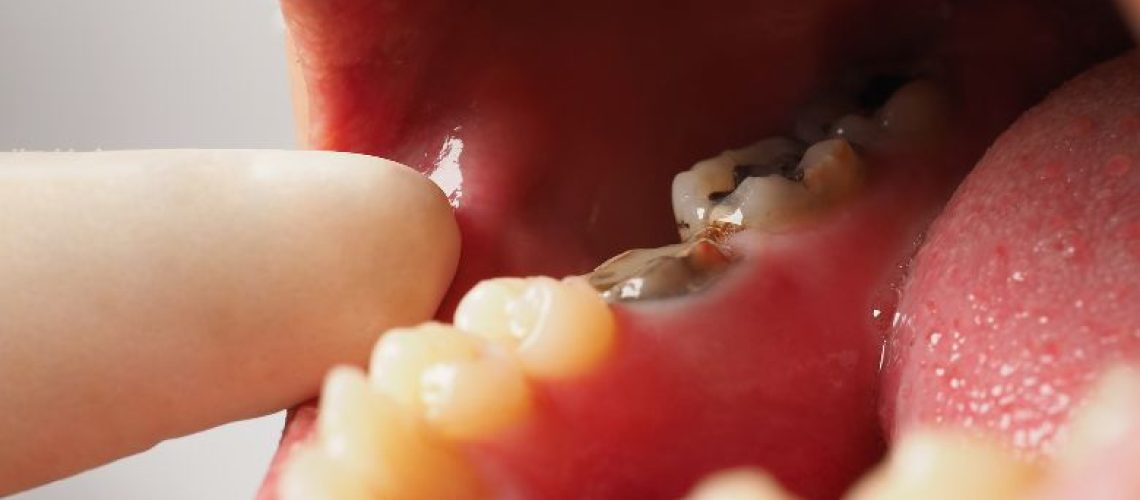
The moment decay physically penetrates the enamel and enters dentin, early tooth decay treatment alone is insufficient. Dentin contains microscopic tubules that connect directly to the tooth’s nerve. Once bacteria enter these channels, decay accelerates rapidly, and you are left with pulp exposure and infection. A filling placed at the dentin stage halts this progression; waiting past this stage results in a root canal, crown, or, in advanced cases, extraction.
Signs you are past the reversible stage:
- Pain that lingers after heat or cold, rather than passing quickly
- A visible dark pit or physical hole in the tooth surface
- Spontaneous toothache with no obvious trigger
- Swelling around the tooth or jaw
Prevent tooth cavities from reaching this point by treating early cavity signs before they cross the enamel boundary. A remineralization protocol and a root canal are separated by months, not years.
How to Prevent Future Tooth Decay
Cavity prevention tips grounded in clinical evidence:
- Schedule professional cleanings every six months, dental checkup importance lies in the fact that incipient lesions are clinically invisible without examination and X-rays.
- Chew sugar-free gum containing xylitol between meals; xylitol actively inhibits Streptococcus mutans, the primary species among bacteria causing decay.
- Rinse with plain water immediately after acidic foods or drinks to neutralize oral pH before brushing.
- Ask about dental sealants for molars, an effective and underutilized prevent cavities naturally strategy for both adults and children with high decay risk.
Consistent oral health maintenance is not a single habit; it is a system in which every element either removes a risk factor or reinforces a protective one.
Common Questions About Reversing Tooth Decay
1. Can cavities heal naturally?
An early lesion, a white spot without any physical hole, can remineralize under the right conditions. A real cavity can’t do that. This is a biological hard stop, not a matter of degree.
2. Is fluoride necessary to reverse cavities naturally?
It is the most effective tool available for accelerating enamel remineralization. Dietary and hygiene improvements help, but professional fluoride treatment achieves remineralization rates that home care alone cannot replicate.
3. How long does it take to reverse decay?
With regular fluoride use, dietary changes, and a disciplined oral hygiene routine, measurable enamel recovery can be seen in two to four months. Depending on the extent of initial damage, full remineralization can last up to six months.
4. What happens if early decay is ignored?
Decay crosses into dentin, where its progression accelerates. The pulp is exposed, infection sets in, and what could have been repaired without surgery now needs a root canal or extraction. Adjacent teeth may shift into the gap, and bone loss begins in the extraction site. There is no stage of tooth decay progression that becomes easier to treat with more time.
Choosing the Right Dental Care Provider
Catching early cavity signs requires both the right diagnostic technology and the clinical thoroughness to use it. At Meridian South Family Dentistry, serving Tacoma, Graham, and Puyallup, WA, we use state-of-the-art examination tools to identify incipient lesions before they become cavities, and we give every patient a clear, honest picture of where they stand.
Our team offers professional fluoride treatment, deep cleaning teeth protocols, and personalized early decay treatment plans built around each patient’s specific risk profile. We do not recommend treatment you do not need, and we will tell you directly when watchful waiting is the right call.
Your Teeth Won’t Wait, But You Still Have Time
Reverse early tooth decay protects far more than one tooth; it protects the surrounding teeth, the underlying bone, and your long-term treatment options. Enamel you save today is enamel you don’t have to replace tomorrow. That’s a difference worth making.
Meridian South Family Dentistry has provided honest, thorough, compassionate dental care to patients across Tacoma, Graham, and Puyallup, WA since 1982. Our philosophy, built on honesty, integrity, and clinical excellence, means you will always know exactly what is happening in your mouth and exactly what your options are. Whether you need a professional fluoride treatment, a deep cleaning teeth session, or simply a thorough exam to confirm everything is on track, our team is ready.
Call us at 253-847-4388 to schedule your appointment. If it has been more than six months since your last checkup, the incipient lesion you have not noticed yet may already be forming. Let us find it while it can still be reversed.