Most people don’t realize that their smile is costing them opportunities, not just confidence. Studies have shown that we size people up in the first seven seconds of meeting them, and the first thing they see is your smile. Chipped, stained, or uneven teeth don’t just affect how others see you; over time, they affect how you see yourself. But you can’t ignore these problems: the worn enamel continues to erode, the discoloration gets worse, and the cracks get bigger. The longer you wait, the fewer cosmetic dental solutions remain on the table. At Meridian South Family Dentistry, we’ve helped thousands of patients across Tacoma, Graham, and Puyallup, WA, take back their smiles, with results that genuinely last.
This blog covers everything you need to know before getting veneers: how long do veneers last, what type is right for you, what shortens their life, and whether the investment truly pays off.
What Are Dental Veneers?
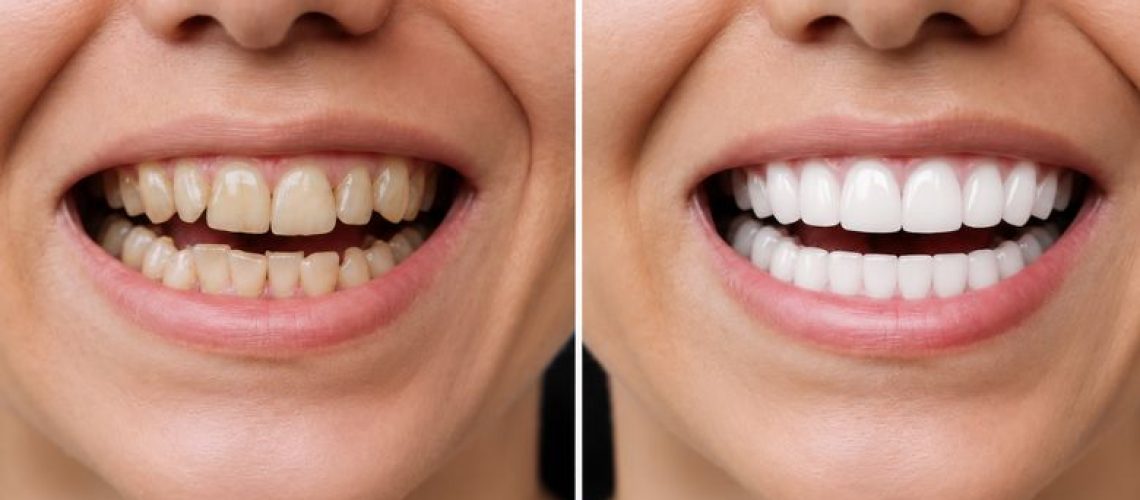
A veneer is a thin shell of porcelain or composite bonded to the front of your tooth, custom-made to correct color, shape, size, and symmetry in one visit. Unlike whitening, which only addresses surface stains, veneers are a structural cosmetic dental treatment that rebuilds the appearance of your smile from the outside in. Each is custom-fit to match your natural teeth so perfectly that people who know you often cannot tell the difference.
Types of Dental Veneers
1. Porcelain Veneers
Porcelain mimics natural enamel better than any other material, with the same translucency and light reflection. Porcelain veneers’ benefits include superior stain resistance, a longer porcelain veneers lifespan, and a finish that holds up decades without fading. They are bonded permanently, which means a small amount of enamel is removed in the preparation, a one-time, irreversible procedure.
2. Composite Veneers
In a single visit, composite resin is placed and sculpted directly onto the tooth. Composite veneers pros: a lower initial dental veneers cost, no waiting time and repairability; a chip can be repaired without replacing the whole veneer. The tradeoff is a shorter composite veneer’s lifespan and slightly less resistance to staining over time.
How Long Do Dental Veneers Last?
- Porcelain veneers’ lifespan: 15–20 years on average, with well-maintained cases exceeding 25 years.
- Composite veneers’ lifespan: 5–7 years before noticeable wear or discoloration sets in.
How long veneers last ultimately isn’t just about material; it’s about what happens after placement. Two patients can have the same porcelain veneers done on the same day and have totally different results in year ten based on habits and follow-through alone.
Think about it this way: A veneer is only as permanent as the care you give it. The material sets the ceiling; your habits determine whether you reach it.
Factors That Affect Veneer Longevity
1. Teeth Grinding
Teeth grinding veneers is the number one silent killer of veneer longevity. Most people who grind do it unconsciously at night. The pressure cracks the porcelain, but not in a dramatic way. It does so gradually, over time. A custom night guard reduces this risk to almost nothing.
2. Bite Pressure
Biting into ice, hard candy, or using your teeth as tools creates bite pressure that veneers can’t withstand. Porcelain is strong under normal chewing force, but not invincible under repeated impact.
3. Oral Hygiene
Veneers don’t decay, but the teeth beneath them do. Neglecting oral hygiene and veneer care leads to gum recession and decay at the margin where the veneer meets the tooth, which compromises the bond and ultimately the veneer itself.
Are Dental Veneers Worth It?
The honest answer depends on what you’re solving. For isolated staining, whitening may be enough. Bonding is for a single chip. But with a handful of problems, whether it’s discoloration, irregular shape, worn edges, or slight spacing, veneers can fix them all in one go and produce results that look better and last longer than patchwork work.
The veneers cost vs value calculation changes significantly when you factor in longevity. A veneer that looks good for 20 years with almost no maintenance is a whole other kind of investment than a whitening treatment that needs repeating every year or two. Dental veneers’ lifespan, when properly extended, makes the per-year value of porcelain one of the most competitive in cosmetic dentistry options.
Pros and Cons of Veneers
| Porcelain Veneers | Composite Veneers | |
| Lifespan | 15–25 years | 5–7 years |
| Stain Resistance | Excellent | Moderate |
| Repairability | Must replace | Repairable |
| Prep Required | Yes (irreversible) | Minimal |
| Are veneers worth it? | Long-term value | Budget-friendly entry |
Veneers vs Other Cosmetic Dental Options
- Veneers vs bonding: Bonding gets the job done for a single chip or minor discoloration, but it absorbs stains, wears down faster, and rarely holds up as a long-term solution when multiple teeth are involved.
- Veneers vs crowns: Crowns make sense when a tooth is structurally compromised. But if the tooth underneath is healthy and the concern is purely cosmetic, removing that much natural structure isn’t necessary; veneers cover what needs fixing without touching what doesn’t.
- Teeth whitening alternatives: Whitening works only on natural enamel and does not change shape or texture. For patients who want more than just shade concerns, veneers are always the better long-term smile makeover option.
- Before choosing any cosmetic treatment, ask yourself this: Are you treating a symptom, or solving the problem?
What to Expect During the Veneer Procedure
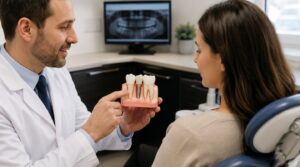
The dental veneer procedure runs across two to three appointments. First, a consultation where your dentist evaluates your teeth, discusses your goals, and confirms candidacy. Then there is a preparation appointment to slightly reduce some enamel and take impressions. The final step is the bonding appointment, where your custom veneers are permanently placed and checked for bite alignment and adjusted as needed. The result, your veneers before and after, is typically visible in a single placement visit.
How to Care for Your Veneers
Veneer maintenance tips that actually extend lifespan:
- Use a soft-bristled brush and non-abrasive toothpaste daily
- Floss consistently along the gumline; this is where bonds weaken first
- Wear a nightguard if you grind
- Avoid biting hard objects directly with veneered teeth
- Keep up with professional cleanings as part of your dental care routine, every six months, no exceptions
Long-lasting veneers are never the result of luck. They’re the result of a consistent routine and honest follow-through.
Risks and Considerations
Veneers are non-reversible; when you remove enamel, your tooth will always need coverage. Some patients develop a temporary sensitivity after placement, which subsides within weeks. Those with active decay, gum disease, or severely weakened enamel may not be candidates initially. Veneer replacement cost is also a reality to plan for, especially with composite, which requires more frequent replacement cycles.
Frequently Asked Questions About Veneers
- Do veneers look natural?
Yes, especially porcelain. Natural-looking veneers are the standard, not the exception, when placed by an experienced dentist. - Can veneers be replaced?
Absolutely. When they reach the end of life, new veneers are bonded in their place. - Are composite veneers a good starting point?
For patients exploring cosmetic veneers’ benefits on a tighter budget, composite is a legitimate starting point, with the understanding that replacement will come sooner.
Choosing the Right Dentist for Veneers
Veneer outcomes are inseparable from the skill of the dentist placing them. Material quality, prep technique, and bonding precision all determine whether your veneers look seamless or obvious, and whether they last 10 years or 20.
At Meridian South Family Dentistry, we’ve delivered excellence in dentistry since 1982, with over 40 years of experience, a 15-person clinical team, and more than 5,200 patients who’ve trusted us with their smiles.
Our practice is built upon the values of honesty, integrity, and clinical precision, the same values that guided us in 1982 and that guide us today. We treat every smile as the individual work of art that it is, serving patients throughout Tacoma, Graham, and Puyallup, WA.
Is the Investment in Veneers Worth Your Smile?
How long do dental veneers last is ultimately the wrong question to lead with; the right question is: what are you willing to do to protect them? Porcelain veneers placed today can still be performing beautifully in 2045. Composite veneers, maintained well, deliver consistent results through their lifespan. The material determines the ceiling; your habits determine how close you get to it.
At Meridian South Family Dentistry, we offer cosmetic dental treatment that goes beyond aesthetics; we build smiles that hold up to real life. Our team takes the time to evaluate your specific situation, explain every option with full transparency, and recommend only what genuinely serves you long term. Whether you are just beginning to explore smile makeover options or you are ready to take the plunge, we will be here to walk you through every step.
To schedule your veneer consultation and improve your smile appearance with a team that has done this for over four decades, call us at 253-847-4388. Serving patients in Tacoma, Graham, and Puyallup, WA, and surrounding Pierce County communities.