Most people don’t think about their teeth until one of them starts failing. A cracked tooth, deep decay, or a tooth that’s been hollowed out by a root canal doesn’t announce itself loudly at first. It whispers through sensitivity, a dull ache, or a visible chip you keep meaning to get checked. Ignore those signals long enough, and what was a straightforward dental crown procedure becomes an extraction, a gap in your smile, and a far more complex path to tooth restoration. At Meridian South Family Dentistry, we see this pattern more than we’d like, and we’re here to make sure you understand your options before that window closes.
This blog walks you through everything worth knowing about dental crown treatment: who actually needs one, what the procedure involves step by step, how long it takes, and how to make your crown last. No fluff, just the information that genuinely helps you make a confident decision.
Signs You May Need a Dental Crown
Some tooth damage is visible. Most isn’t. A tooth can be structurally compromised long before it causes consistent pain, which is exactly why routine exams matter. That said, certain signs strongly suggest dental crowns are the right next step:
- A cracked tooth that causes sharp, fleeting pain when you bite, particularly on release.
- Decay is so advanced that a filling would leave too little healthy structure behind.
- A tooth that has completed root canal therapy and now lacks internal support.
- Fractures, chips, or erosion that have significantly weakened the outer tooth.
- Discoloration or shape irregularities that affect both function and appearance.
Cracked tooth treatment matters more than most patients realize. A crack that reaches the pulp doesn’t heal on its own; it progresses, often silently, until extraction becomes the only viable option.
A tooth that’s cracked doesn’t need to be lost. But a crack that’s ignored? That’s a different story entirely.
Types of Dental Crowns
The material of your crown affects everything: how it looks, how it performs, and how long it lasts. Understanding your options makes the conversation with your dentist far more productive.
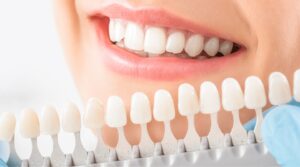
The most commonly used materials today are porcelain crowns and zirconia crowns. Porcelain crowns offer a great aesthetic, so they are suitable for the front teeth, where a natural-looking crown is important. Zirconia crowns are highly durable and strong enough to withstand the pressure of back molars, and they look natural without compromising on color match.
Porcelain-fused-to-metal crowns are a compromise. Full metal crowns, although rarely chosen today, are second to none for longevity and for patients with heavy bite forces.
The ideal crown material will depend on factors such as the tooth being treated, the level of damage, and your desired outcome, all of which your dentist will evaluate. It is not a matter of cosmetic tooth restoration and structural protection; a good crown does both.
What Happens During a Dental Crown Procedure?
Usually, it takes two visits for a dental crown placement, with a dental lab handling the fabrication in between. Here’s what the process really looks like.
1. Examination and Crown Preparation
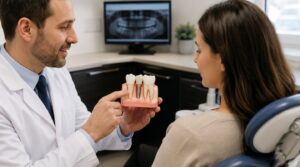
The first visit begins with a full assessment, X-rays, a clinical exam, and a discussion of your goals. Once a crown is confirmed as the right treatment, crown preparation begins. The tooth is numbed, and a specific amount of outer structure is removed through tooth enamel reshaping to create room for the crown to seat and function properly.
If the tooth has lost significant structure to decay or fracture, we build it back up before anything else, a core buildup that gives the crown-supported tooth the solid foundation it needs to support a permanent restoration long-term.
2. Impressions and Temporary Crown
Once the tooth is shaped, we take digital dental impressions that capture every detail of your tooth and surrounding bite. That data is sent straight to the lab where technicians make your custom-made crown to match the exact color, contour, and size of your natural teeth.
Meanwhile, a temporary crown is put in place. This is not as durable as your permanent restoration so during this phase, do not eat hard or sticky foods to protect the temporary restoration and the tooth underneath that has been prepared.
3. Crown Fitting and Cementation
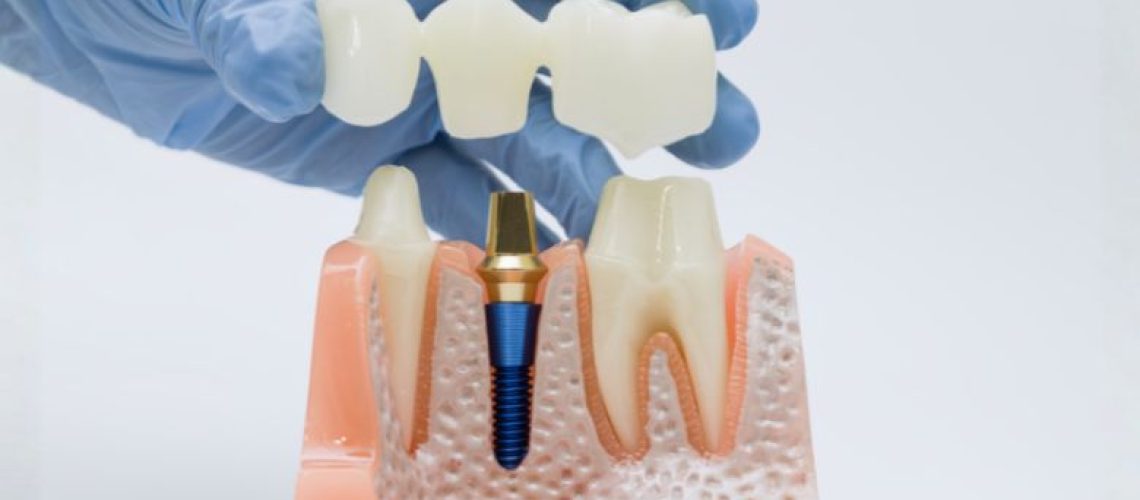
When your permanent tooth crown returns from the lab, typically within one to two weeks, we bring you in for the final appointment. The fit, bite, and appearance are all verified before crown cementation, making it permanent. Any minor adjustments are made chairside. Most patients leave this appointment barely aware that anything has changed, which is exactly the goal.
| Stage | What Happens | Timeframe |
| First visit | Exam, prep, impressions, temp crown | 60–90 min |
| Lab phase | Crown fabrication | 1–2 weeks |
| Second visit | Crown fitting, adjustments, cementation | 30–60 min |
Is Getting a Dental Crown Painful?
Honestly, most patients are surprised by how uneventful both appointments are. Local anesthesia is used throughout, so dental crown treatment itself involves no pain. What follows is usually a day or two of mild gum soreness and some sensitivity near the prepared tooth, nothing that over-the-counter relief can’t handle. If your bite feels uneven after crown cementation, don’t wait it out. A quick adjustment solves the problem before it causes jaw discomfort or puts unnecessary stress on the crown.
How Long Does a Dental Crown Procedure Take?
Two appointments. Two to three weeks total from start to finish. The first run is longer, roughly an hour to ninety minutes, because it involves crown preparation, impressions, and placing the temporary. The second is quicker, focused entirely on crown fitting and final placement.
Some practices now offer single-visit crowns using in-office milling. Your dentist will advise whether that’s appropriate for your case.
Recovery and Aftercare Tips
Oral health restoration doesn’t end when the crown is placed. How you care for it determines how long it performs.
- Brush twice daily and floss carefully around the crown margin to prevent decay at the gum line
- Avoid chewing ice, hard candy, or anything that places excessive force on the crown
- If you grind your teeth at night, a custom nightguard is non-negotiable. Grinding is one of the primary reasons crowns fail prematurely
- Keep up with biannual cleanings so we can monitor the fit and condition of the crown over time
The tooth-strengthening treatment a crown provides is only as effective as the maintenance behind it.
How Long Do Dental Crowns Last?
With consistent care, most dental crowns last between 10 and 15 years. Zirconia crowns frequently exceed that range. What shortens a crown’s lifespan isn’t usually the material; it’s grinding, poor hygiene, or skipping regular checkups until a problem becomes obvious.
Restoring damaged teeth is only half the equation. Protecting that restoration over time is what makes it a worthwhile, lasting investment in your oral health.
Your Path to a Stronger, Healthier Smile
Dental crown treatment is one of the most effective tools in restorative dentistry, capable of saving a tooth that would otherwise be lost, rebuilding function that decay or fracture has compromised, and delivering smile restoration that looks and feels completely natural. The dental restoration procedure is predictable, manageable, and far less daunting than most patients expect when walking in.
Our team at Meridian South Family Dentistry has spent decades helping patients across Graham, Puyallup, Tacoma, Orting, and Spanaway protect and restore their smiles through restorative dental treatment that’s built around their specific needs. We combine advanced technology with a genuinely patient-centered approach, whether that means cracked tooth restoration, decayed tooth treatment, or damaged tooth repair following a root canal. Every treatment plan we build starts with an honest conversation about what’s best for your tooth and your long-term oral health restoration.
When a tooth starts showing signs of failure, the timeline matters more than most people realize. Don’t let a fixable problem become an irreversible one. Call us today at 253-847-4388 to schedule your consultation and take that first step toward a stronger, healthier smile.