Your teeth go through a lot every single day, from your morning coffee to that occasional handful of trail mix. Most of the time, they hold up just fine. But every so often, a tooth starts sending signals that something is wrong, and it is easy to brush those signals off until the discomfort becomes hard to ignore. If you have been putting off a dental visit while quietly wondering whether that nagging tooth needs more than a filling, you are not alone, and this guide is here to help you figure out what is really going on.
Patients looking for a dentist in Graham, Puyallup, Tacoma, Frederickson, Eatonville, and Orting often reach out only after a small issue with a dental crown has grown into a bigger one. Below, we walk through the most common signs that a dental crown treatment may be the right next step, along with what the process actually involves.
7 Important Signs You May Need a Dental Crown
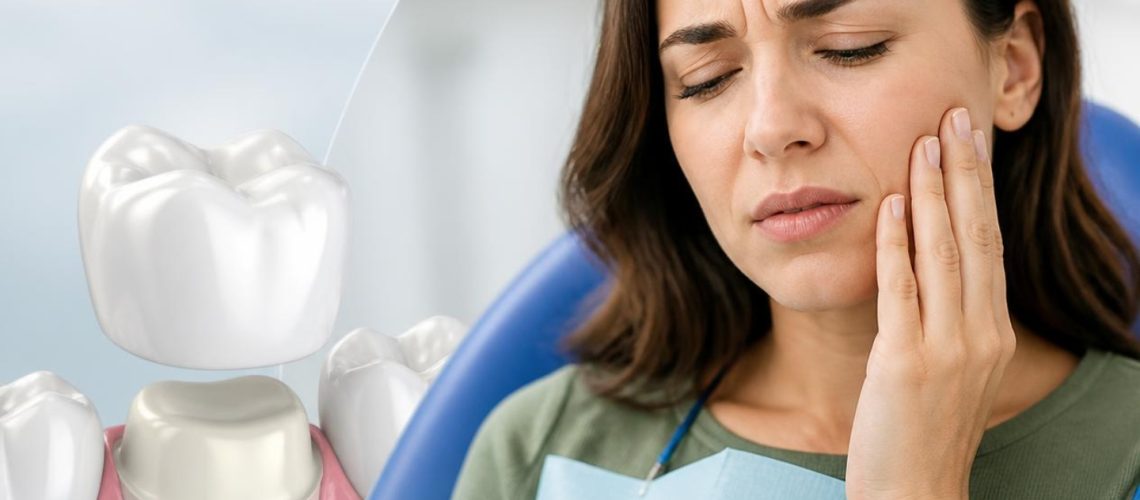
A dental crown is a custom-fitted cap that covers a damaged tooth from the gumline up. It restores the tooth’s shape, protects what remains of the natural structure, and lets you bite and chew without worrying about further damage.
Here are seven signs worth discussing with a dentist in Tacoma ,Graham or Puyallup whom patients have come to trust for restorative work.
Your Tooth Is Cracked
Cracks are sneaky. Plenty of people walk around with one for weeks without realizing it, since the pain does not always show up right away.
Watch for these clues:
- Sharp, sudden pain when you bite down
- Sensitivity to hot or cold that lingers
- Discomfort that comes and goes without warning
- A visible line or fracture on the tooth’s surface
A crown is often part of cracked tooth treatment because it essentially holds the tooth together, preventing the crack from spreading further. The National Institute of Dental and Craniofacial Research notes that untreated damage tends to compound over time, which is exactly why catching a crack early matters.
A Large Portion of the Tooth Is Missing
Once a tooth loses a significant chunk of its structure to decay, injury, or years of wear, a standard filling often cannot pick up the slack.
A crown becomes the more realistic option when:
- More than half the tooth has been compromised
- The tooth feels unstable or weak while chewing
- Earlier repairs keep failing
For patients researching dental crowns in areas like Frederickson, Eatonville, or Graham, saving the natural tooth with a crown is almost always preferable to pulling it.
You Have a Large or Failing Filling
Fillings do their job well, but nothing lasts forever, and large fillings are especially prone to giving out over time.
Keep an eye out for a filling that:
- Cracks
- Leaks
- Loosens
- Lets bacteria sneak underneath
Once a filling occupies most of the tooth, a crown typically offers a sturdier, more dependable long-term solution.
Filling vs. Crown: A Quick Snapshot
Situation | A Filling Usually Works | A Crown Is Often the Better Call |
| Small, early-stage cavity | Yes | Not usually needed |
| Moderate decay | Often | Sometimes, depending on extent |
| Filling that keeps failing | No | Yes |
| Noticeable fracture | No | Yes |
| Tooth that had a root canal | No | Yes |
You Recently Had a Root Canal
Root canal therapy clears out infected tissue and saves the tooth, but it can also leave the remaining structure more fragile and prone to cracking under pressure.
That’s why a crown so often follows root canal work, especially on molars and premolars. Without it, the tooth is left doing all the same chewing work with a fraction of its original strength, and cracks tend to show up sooner rather than later. A crown restores that strength, keeps future fractures at bay, and gives the tooth a real shot at lasting for decades. It’s a small step that saves a lot of trouble later, which is why so many patients exploring dental crowns in Tacoma or Puyallup end up getting one right after their root canal is finished.
Your Tooth Is Severely Worn Down
Grinding, clenching, or simple day-to-day wear can slowly shave down a tooth without you noticing until it is fairly advanced.
Signs to watch for include:
- A flattened chewing surface
- Rising sensitivity
- Teeth that look shorter than they used to
- Trouble chewing certain foods comfortably
A crown can rebuild the tooth’s original height and shape while shielding what remains underneath.
The Centers for Disease Control and Prevention notes that untreated oral health problems can interfere with eating, speaking, and everyday quality of life, which is another reason not to let worn-down teeth go unaddressed.
You Have Persistent Tooth Sensitivity
Sensitivity by itself doesn’t necessarily mean a crown is in your future. Plenty of people experience sensitive teeth for reasons unrelated to structural damage. But if that sensitivity is showing up alongside a crack, a worn edge, or a filling that’s seen better days, it’s a different story.
Pay attention if any of these tend to catch you off guard:
- Ice cream
- Coffee
- Hot soup
- Cold drinks
- Sweets
When a tooth is exposed or compromised beneath the surface, a crown acts like a shield, sealing off the sensitive area and often providing real relief.
You Want to Improve the Appearance of a Damaged Tooth
Crowns are not just functional; they can also give a tired-looking tooth a fresh start when it is:
- Misshapen
- Noticeably discolored
- Chipped
- Uneven compared to neighboring teeth
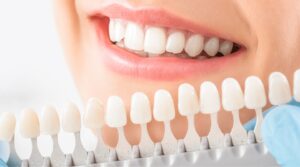
Today’s natural-looking crowns are crafted to blend seamlessly with the rest of your smile. For anyone weighing tooth restoration options, a crown often checks both the health and cosmetic boxes at once.
Understanding Cracked Teeth: Why Waiting Can Make Things Worse
A hairline crack rarely feels urgent at first. You might only notice it while biting into something firm, like a nut or a raw carrot. Left alone, though, ordinary chewing pressure can push that crack deeper into the tooth over time.
What Tends to Cause Cracked Teeth
Common Cause | Why It Puts Teeth at Risk |
| Nighttime teeth grinding | Places repeated, excessive stress on enamel |
| Sports-related impact | Sudden force can fracture a tooth instantly |
| Falls or accidents | Direct trauma often leads to structural cracks |
| Oversized fillings | Leaves less natural tooth to absorb pressure |
| Age-related wear | Enamel naturally thins and weakens over the years |
Catching a crack early gives your dentist the best shot at preserving the tooth with a crown, rather than facing more involved treatment later. It is one reason providers offering dental crowns in Orting, Graham, Puyallup, Tacoma, Frederickson, Eatonville, and Orting encourage patients to come in at the first sign of trouble rather than waiting it out.
Why Large Fillings Sometimes Become a Problem
Plenty of adults have fillings that have served them well for years without issue. But as a filling grows larger over time, less of the natural tooth is left to do the heavy lifting, and eventually it may struggle to withstand normal chewing.
Watch for these warning signs of a filling on its way out:
- Pain while chewing
- Cracking around the edges of the filling
- Food that keeps getting trapped in the same spot
- A visible gap forming
- Sensitivity that keeps increasing
When these signs appear, a dental crown generally offers a more reliable, longer-lasting solution than repeatedly replacing the same filling.
The Benefits of Dental Crowns
It is easy to think of a crown as just a repair, but it does more than patch up a problem tooth.
Here’s what a crown is actually doing for you beyond just fixing the immediate problem:
- Shields a weakened tooth from taking on more damage
- Brings back full, pain-free chewing
- Gives the tooth a more natural, polished look
- Backs your long-term oral health
- Keeps as much of your own natural tooth in place as possible
- Stops a small issue from snowballing into a bigger one
- Provides steady, dependable tooth protection for years
It’s this combination of strength, function, and appearance that makes crowns such a mainstay of restorative dentistry.
What Happens During a Dental Crown Procedure?
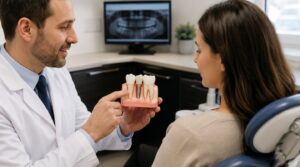
Uncertainty about the process keeps many people from scheduling a visit in the first place. The good news is that a tooth crown procedure is fairly straightforward.
- Examination. Your dentist takes a close look at the tooth and pulls any necessary imaging to see the full picture.
- Tooth Preparation. A small amount of enamel gets reshaped so there’s room for the crown to sit properly.
- Impressions or Digital Scans. Careful measurements are taken so the crown fits where it belongs.
- Crown Fabrication. The crown is built to match the color and shape of the surrounding teeth.
- Placement. Once it’s ready, the crown is set in place and adjusted until your bite feels right.
Most patients are surprised at how manageable this process feels, especially with modern technology involved. Meridian South Family Dentistry places a strong emphasis on this kind of up-to-date, patient-first dental treatment throughout every visit.
Crown Material Options: Which One Is Right for You?
Not every tooth calls for the same crown material. What works best usually depends on where the tooth sits in your mouth and how much daily wear it has to withstand.
Crown Material | Best Suited For | Main Advantage |
| Ceramic | Front teeth | Blends naturally with your smile |
| Porcelain | Highly visible teeth | Realistic, tooth-like appearance |
| Porcelain-Fused-to-Metal | Front and back teeth | Combines strength with good looks |
| Metal Alloy | Molars | Built to handle heavy chewing |
| Zirconia | A range of applications | Strong and cosmetically pleasing |
A handful of factors usually shape this decision: where the tooth sits, how much bite force it handles day to day, what you’re hoping for cosmetically, and the overall condition of the tooth itself. A conversation with a provider offering dental crowns near Graham, Puyallup, or Tacoma is the best way to find the right fit for your situation.
Crown Care Tips for Long-Term Success
A crown itself cannot decay, but the tooth underneath still needs your attention.
Daily Care Checklist
- Brush twice a day
- Floss carefully around the crown
- Go easy on especially hard foods
- Wear a nightguard if you grind your teeth
- Keep up with regular dental checkups
- Address any discomfort right away rather than waiting
Quick Tip: If a crown ever starts to feel loose, do not wait around for it to fall off on its own. Call your dentist promptly so the issue can be addressed before it becomes something bigger.
When Should You Schedule a Dental Visit?
Dental problems rarely announce themselves loudly at first. It is worth reaching out to a dental professional if you notice:
- Tooth pain that will not let up
- Sensitivity that lasts more than a few days
- A crack you can see
- A filling that has broken
- Trouble chewing on one side
- Discoloration following an injury
Catching these signs early usually means a simpler treatment path and a better outcome down the road. Whether you are searching for dental services in Graham, Frederickson, Eatonville, Orting, Puyallup, or Tacoma that residents recommend, getting ahead of the problem is always the smarter move.
Protecting Your Smile Before Small Problems Become Big Ones
More often than not, a well-fitted crown can bring back strength, appearance, and everyday function, sparing you from a more involved procedure down the line. If you’ve noticed signs of damaged teeth, broken teeth, or weakened teeth, getting it looked at by a professional is the right first move.
Meridian South Family Dentistry serves patients across Graham, Tacoma, Puyallup, Frederickson, Eatonville, Orting, and the wider Pierce County area, offering dental crowns, bridges, composite fillings, root canals, dental implants, preventive care, and cosmetic dentistry in a setting built around patient comfort.
If a damaged tooth has been on your mind, reach out to our dental crown experts at 253 847-4388 to schedule a consultation and take the next step toward a healthier smile.