A dental crown is designed to be the strongest thing in your mouth. It is milled from zirconia or reinforced porcelain, bonded under pressure, and built to handle thousands of bites a day. But crowns do fail, and they do so slowly and quietly, often without any pain until the tooth underneath is in big trouble. The real problem isn’t that crowns wear out; everything does eventually. The problem is that most people don’t know what a failing dental crown looks and feels like in its early stages, so they miss the chance to fix it easily. At Meridian South Family Dentistry, serving patients across Graham, Puyallup, and Tacoma, WA, we see this pattern constantly, and we built our evaluation process specifically to catch what patients can’t see on their own.
This blog covers everything you need to know, from understanding dental crown lifespan by material, to spotting the earliest signs your dental crown needs replacement, to what modern crown technology looks like today.
How Long Do Dental Crowns Typically Last?
The truth is that it depends, and most patients are never told exactly what it depends on. Knowing this ahead of time changes how you take care of your crown and when you get it checked out.
Average Lifespan by Material
| Crown Material | Average Lifespan | Best For |
| Zirconia crown | 15–25 years | Strength + aesthetics |
| Metal (Gold/Alloy) | 20–30 years | Back molars, heavy bite |
| Porcelain crown | 10–15 years | Front teeth visibility |
| Porcelain-fused-to-metal | 10–15 years | Balance of both |
| Composite resin | 5–7 years | Temporary or budget option |
Zirconia crowns are now the best choice for modern restorative dentistry because they are as strong as metal and look natural, and they don’t develop the dark margin line that older crowns often do at the gumline over time.
1. Factors That Affect Crown Longevity
Teeth grinding is one of the biggest threats to a crown that people don’t think about. Bruxism can cause a well-placed zirconia crown to break within a few years because of the repeated bite pressure. Beyond that, consistent crown maintenance, cleaning around the margins, avoiding hard foods, and attending regular dental checkups directly determine how long your restoration holds.
2. The Importance of Regular Checkups
A crown can be failing at the margin for months before you feel anything. Regular oral health monitoring through digital X-rays and clinical exams is the only reliable way to catch early decay or cement breakdown before it escalates into something far more serious.
How Dental Crowns Protect a Weakened Tooth
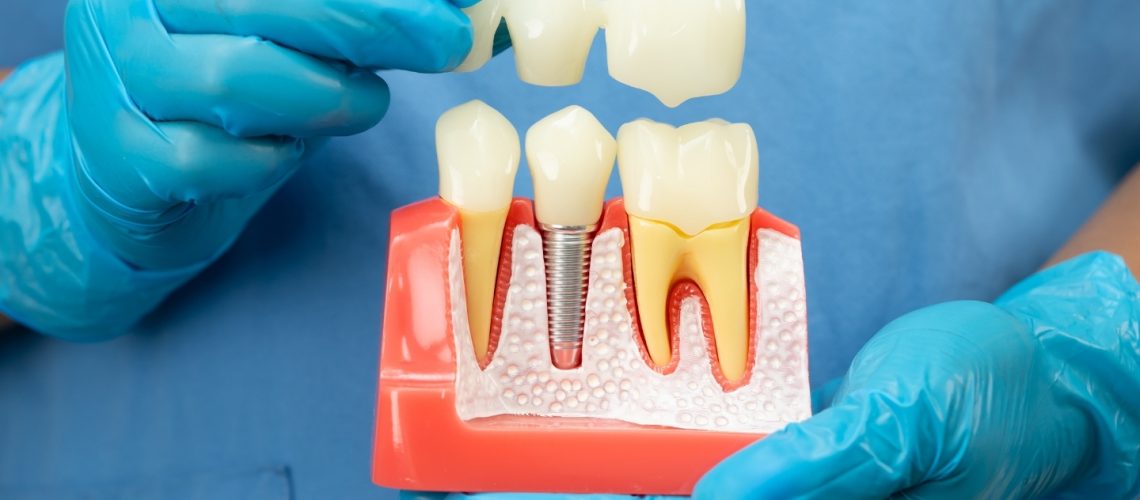
Most patients are never fully told about this. A crown doesn’t just cover a broken tooth; it also spreads the forces of chewing over the whole surface, which keeps the rest of the tooth from cracking under pressure. Teeth with root canal or significant fillings
lose the internal support that keeps them from splitting. A properly fitted crown acts as an external skeleton, holding everything together so the tooth beneath can function without failing.
Common Signs Your Dental Crown May Be Failing
Not every broken crown hurts a lot right away. Some of the most serious warning signs are hard to see, and patients ignore them for months, which is when the real damage starts to happen.
1. Persistent Pain or Sensitivity
Dental crown pain that lingers after eating, or crown sensitivity to temperature that doesn’t resolve quickly, signals that bacteria may have breached the seal. A well-fitted crown should never cause ongoing discomfort.
2. A Loose or Wobbly Crown
A loose dental crown means the cement bond has broken down. Once that seal is gone, saliva and bacteria enter the space between the crown and tooth, accelerating tooth decay under the crown rapidly. This is not a situation that will fix itself.
3. Visible Cracks, Chips, and Gum Changes
A cracked or chipped dental crown weakens the structure of the restoration. Even a tiny crack lets bacteria in. Gum recession around the crown also exposes the margin, where new decay forms most easily. If you see a dark line at the gumline on an old crown, it means that metal is showing through as the gum tissue recedes. This means that the crown design is no longer good.
4. Swelling or Signs of Infection
A crown infection, which shows up as swelling, a bad taste that won’t go away, or a raised bump on the gum, is a dental emergency. An abscess that isn’t treated won’t go away on its own and can spread to nearby teeth and the jawbone.
Your crown isn’t just covering a tooth; it’s the last thing that stands between tooth and extraction. One symptom that goes unnoticed could bring down the whole defense.
Why Do Dental Crowns Fail?
1. Tooth Decay Under the Crown
Tooth decay under the crown starts at the edges, where it can’t be seen and doesn’t hurt at first. X-rays are the only way to see it, which is why not going for dental checkups can be very expensive in the long run.
2. Bite Pressure, Grinding, and Trauma
Teeth grinding generates forces far beyond normal chewing. Over time, this bite pressure wears through the crown material and breaks down the cement bond. Patients who grind without a nightguard are running their crown on borrowed time. A single blow, like a fall or a sports injury, can break a porcelain crown right away.
3. Natural Wear Over Time
Even with perfect care, dental crown lifespan has an end. Most crowns show signs of wear after 10 to 15 years, which quietly weakens their ability to protect before any visible signs appear.
What Happens If a Damaged Crown Is Left Untreated?
If you ignore a broken dental crown or a crown coming off, the damage will get worse faster. The tooth loses its damaged tooth protection and begins fracturing under normal chewing forces. Bacteria advance into the pulp, leading to an abscess. At that point, you have to choose between a root canal and an extraction, not between monitoring and crown replacement.
And losing teeth sets off its own chain reaction. When teeth next to each other move, the bite alignment changes, and bone loss starts at the site of the extraction. What began as a loose dental crown turns into a problem with several teeth and several appointments.
Can a Dental Crown Be Repaired Instead of Replaced?
Crown repair vs replacement depends entirely on what’s wrong.
- Recementation works when a loose dental crown is structurally intact with no decay beneath
- Minor bite adjustments resolve discomfort from an uneven fit
- Full replacement is necessary for a cracked dental crown, active decay, or repeated crown coming off situations
There is no way to fix a broken or decayed crown that will last for a long time. Every week you wait, you have fewer choices.
What to Expect During Crown Replacement
Before we recommend any treatment, every dental crown procedure at our office starts with digital X-rays and a full clinical exam of the tooth, gum tissue, and bone underneath. The old crown is removed under full anesthesia, any decay is cleared completely, and impressions are taken for the new restoration.
For many patients, same-day crown replacement is available using CAD/CAM milling technology. In one appointment, you will get a new crown that is digitally designed, milled from solid ceramic, and put in place. No temporary crown. No second visit.
Trusted Crown Care in Tacoma, Graham, and Puyallup, WA
At Meridian South Family Dentistry, our approach to when to replace a dental crown is never rushed and never based on assumptions. We use 3-D cone-beam imaging alongside digital X-rays to evaluate restorations with a level of detail that standard exams simply can’t provide. Every decision about a dental crown replacement is contingent on the patient, including their bite, bone structure, and goals.
We work with high-quality zirconia crowns and porcelain crowns, matched precisely to your natural tooth color and shape. And where same-day crown replacement is appropriate, we make that available so you leave with a permanent restoration the same day.
Your Smile Deserves a Second Look — Don’t Wait Until It Hurts
A failing crown is not a stable situation; it is a deteriorating one. Every day without evaluation is a day the underlying tooth absorbs unprotected stress, bacteria advance further, and your treatment options quietly narrow. The difference between a simple recementation and a tooth extraction can be as small as one skipped checkup.
At Meridian South Family Dentistry, we’ve built our practice around honest, thorough care that patients across Graham, Puyallup, Tacoma, Spanaway, Orting, and Eatonville, WA trust completely. Our team combines state-of-the-art technology with genuinely personalized treatment, because long-term dental restoration success depends on getting the details right from the start.
If you’ve noticed any of the signs your dental crown needs replacement or haven’t had your crown evaluated in over a year, call us today at 253-847-4388. A single exam can tell you exactly where you stand and what needs to be done about it.